
Keep it to one page if you possibly can
A biodata is read in about forty seconds, usually standing up, often by somebody comparing it against three others. One page respects that. Two is normal and fine. Four means the important things are buried.
If you are struggling to cut, take out the rows nobody has ever asked you about rather than shortening the ones they have.
Write it the way you would say it
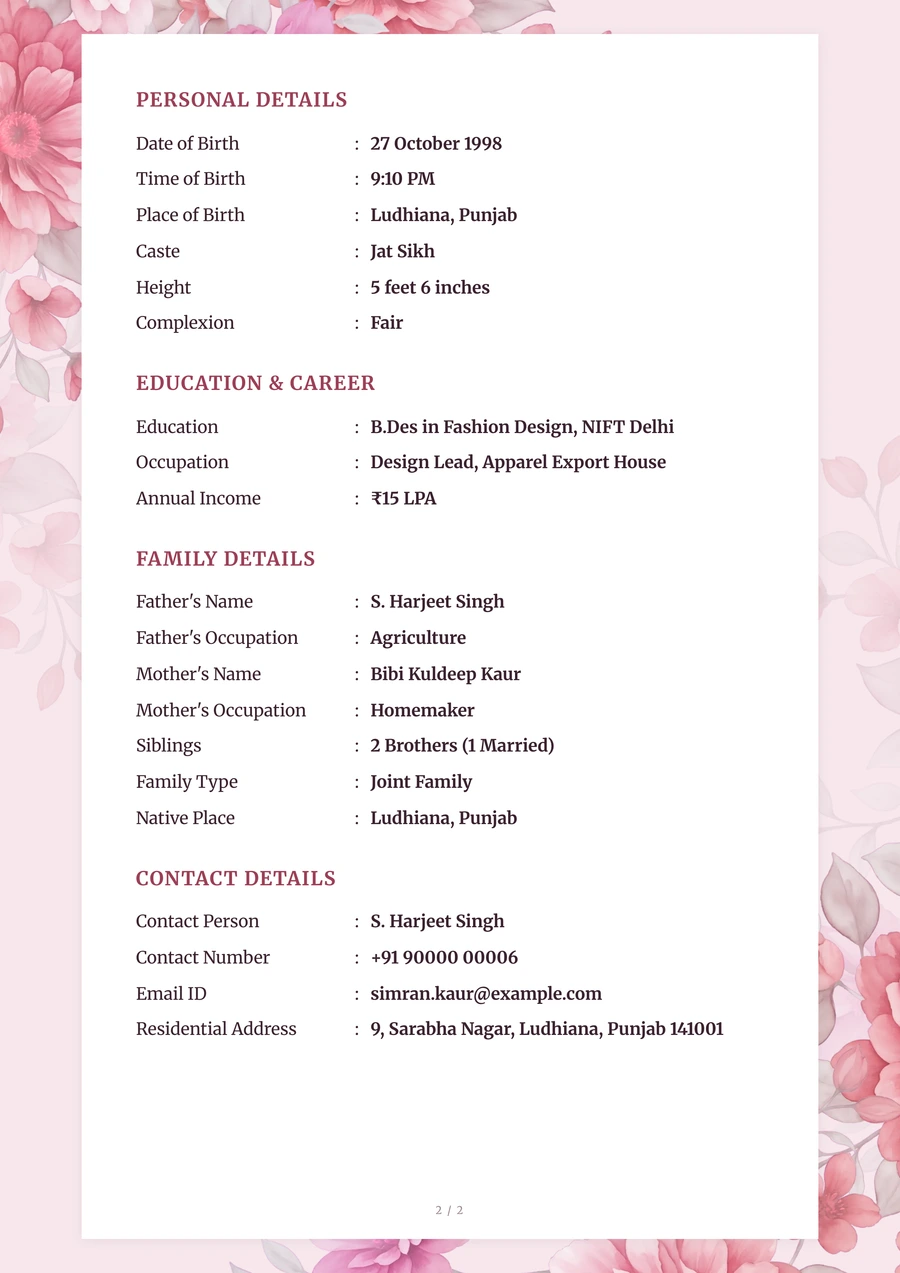
"Working as an assistant manager at HDFC Bank in Indore" is better than "Assistant Manager (Retail Banking Operations), HDFC Bank Ltd., Indore Branch". A biodata is not a CV, and the job title in full does not make you sound more employed.
The same goes for education. One line — the degree and where you took it — is enough. Nobody has asked for a percentage in years.
Be specific about family, briefly
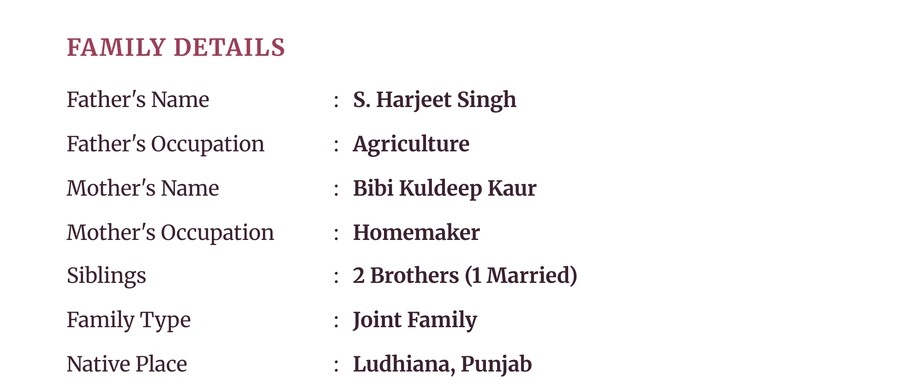
"Father: retired bank manager. Mother: homemaker. One younger brother, unmarried." That is three facts and it tells a family almost everything they wanted to know.
Resist the urge to describe your family's values in a paragraph. Every biodata says the family is loving and well-educated, which means none of them do.
Do not exaggerate anything you would have to walk back
Height, income and age are the three that get checked. Not out of suspicion — they simply come up in conversation, and a number that does not match what you wrote is an awkward moment early in something you wanted to go well.
The same applies to a photograph that flatters more than it should. Everything on the page has to survive meeting you.
Give hobbies two lines of real detail
This is the only part of a biodata that sounds like a person, and most people waste it. "Reading, music, travelling" describes everyone. "Classical dance since I was six, and I bake on Sundays" describes one person.
You do not need many. Two real interests beat six generic ones, and they give whoever reads it something to open with.
Check the contact details twice, then once more
This is the one mistake with a real cost. A wrong digit in a phone number quietly loses you every match on the page, and you will never find out it happened.
Say who the number belongs to as well — in most families the contact is a parent rather than the person the biodata is about, and it helps to know who is picking up.
Send it as a PDF, not a photo of a screen
A biodata gets forwarded on WhatsApp and then printed at a copy shop. A screenshot survives neither well: it goes soft on the phone and worse on paper. A PDF looks the same everywhere it lands, which is the whole point of the document.
Related articles
Choosing the Right Photo for Your Marriage Biodata
A photograph often shapes the first impression of a biodata. Here is how to pick one that feels clear, current and natural.
Read moreRashi, Nakshatra and Gotra in a Marriage Biodata
Four rows some families ask for before anything else, and others never mention. What each one is, and how to decide whether yours belongs on the page.
Read moreThe First Meeting: What to Talk About
The biodata did its job and a meeting is arranged. Here is what people actually talk about in that first half hour, and the questions worth asking early.
Read moreMarriage Biodata for a Boy and for a Girl
Two different searches, two sets of templates, and one document. What genuinely differs between a boy's biodata and a girl's — and what does not.
Read more